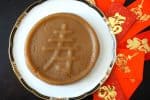
Nián Gāo
Nián gāo is an addictively chewy, slightly sweet Chinese dessert made with sweet rice flour. It's traditionally eaten during Lunar New Year!
Ingredients
- 1 cup brown sugar
- ¼ teaspoon kosher salt
- 1 ½ cups boiling water
- 1 cup coconut milk
- grated orange zest or grated ginger, almond extract, vanilla extract, etc; optional
- 3 cups glutinous rice flour I use Koda brand sweet rice flour
Instructions
-
Dissolve the sugar and salt in boiling water. Add the coconut milk and any flavorings you want, and mix until combined. Then add the rice flour and mix well into a paste. You're looking for something close to really thick peanut butter (think an un-stirred jar of natural peanut butter) or slightly wet cookie dough, so add more water as you see fit to reach this consistency.
-
Transfer the paste into a well-greased (I like using cooking spray, especially if you're trying to use a decorative pan) 10” round cake pan, smoothing as best as you can (it’s okay if it’s still lumpy on top).
-
Steam over medium-high heat until a chopstick inserted in the middle comes out clean. The cook time depends on what kind of steamer you're using; I've had the cake be done in 30 minutes when using a storebought steamer, and 2-2.5 hours using a DIY steamer.
Keep in mind that you might have to add more hot water occasionally, especially if you use a really short rack to elevate your cake pan and a shallow skillet (me). I keep a thermos of hot water on hand and add water 3-4 times throughout the steaming process.
-
Remove the cake pan from the steamer and cool completely. You may be tempted to drain off any water that may have dripped on top of the cake, but resist (or else you might accidentally plop the nián gāo out before you're prepared to).
-
Wrap the nián gāo in plastic wrap tightly. If you plan to eat it within a few days or you plan on eating it plain, then I'd recommend storing at room temperature. Otherwise, store in the refrigerator for up to a week.
-
If the nián gāo is really hard and starchy, cut it up into thin planks, dip in beaten egg, and pan-fry in a skillet until browned.
Recipe Notes
Recipe from my Aunty Myra!
Nián gāo is typically only sugar, water and rice flour, but you can add other flavorings if you want: citrus zest, fresh ginger, extracts. The only mod I like to make is swapping half of the water for light coconut milk, since it gives the nián gāo a bit more flavor, without changing the traditional flavor too much.